
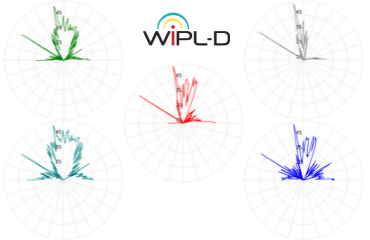
Predicting the monostatic Radar Cross Section (RCS) of an electrically large target such as an aircraft is one of the most demanding tasks in computational electromagnetics. Engineers routinely face a trade-off between full-wave solvers, which deliver the highest fidelity but…

New Application Note: Benchmarking Monostatic RCS Simulation Methods at X-band (10 GHz)
Resources
23-Sep-2026
Resources
04-Aug-2026
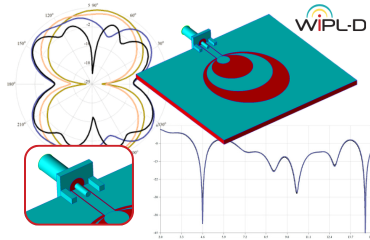
New Application Note: Coplanar Waveguide (CPW) Elliptical Slot Antenna
Our new application note presents the modeling and full-wave simulation of a Coplanar Waveguide (CPW) Elliptical Slot Antenna using WIPL-D Pro CAD. The antenna is analyzed over the 2–15 GHz frequency range, with the reflection coefficient (S11) and radiation pattern…
Resources
01-Jul-2026
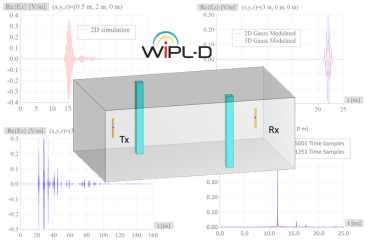
New Application Note: Indoor Wireless Propagation Modeling
As the number of wireless devices continues to grow, accurate modeling of indoor electromagnetic propagation has become increasingly important for the design and analysis of modern communication systems. Applications such as Wi-Fi, Bluetooth, IoT networks, and radar systems all rely…
Resources
14-May-2026
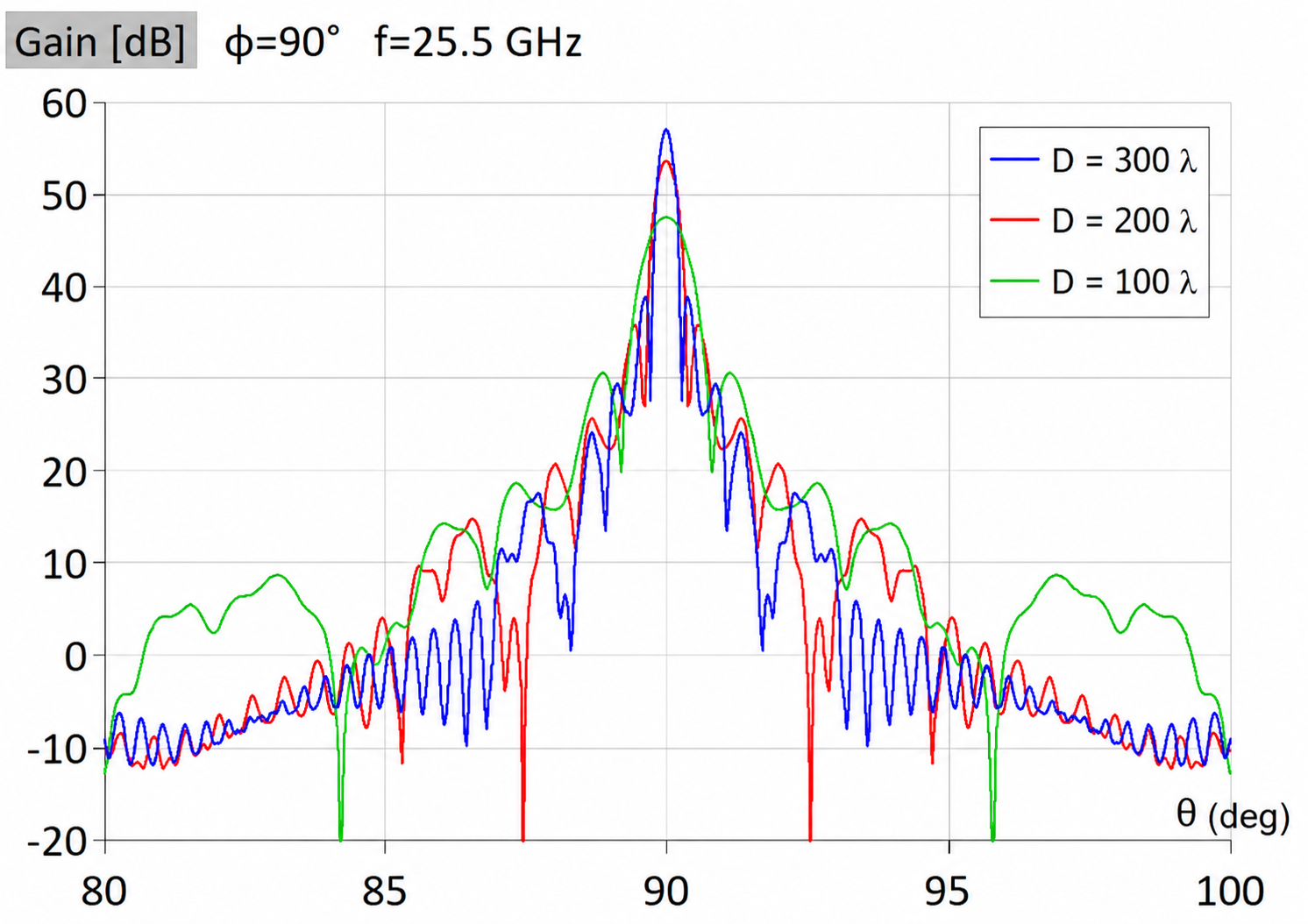
Updated Application Note: Cassegrain Antennas with Diameters Up to 300 λ
We have published an updated application note on Cassegrain antenna simulation using WIPL-D software, covering electrically large reflector antennas with diameters up to 300 λ. The original study, published in 2018, demonstrated efficient full-wave simulations of Cassegrain antennas with reflector…
Resources
23-Mar-2026
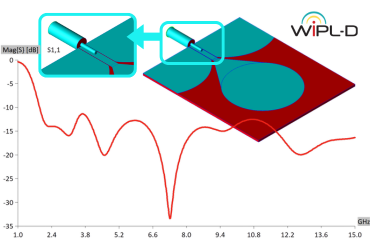
Printed Volcano Smoke Antenna
This application note presents the modeling and simulation of a Printed Volcano Smoke Antenna using WIPL-D Pro CAD. The antenna is analyzed over the frequency range 1-15 GHz, with return loss, VSWR, and radiation pattern as the primary metrics of…
Resources
20-Jan-2026
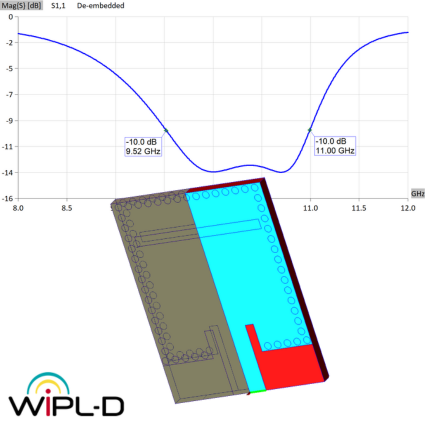
Substrate Integrated Waveguide Cavity-Backed Slot Antenna
This application note describes the design and full-wave simulation of a Substrate Integrated Waveguide (SIW) Cavity-Backed Slot Antenna using WIPL-D Pro CAD. The antenna operates in the 8-12 GHz (X-band), with return loss (illustrated together with the antenna top-view design),…