
Indoor Wireless Propagation Modeling
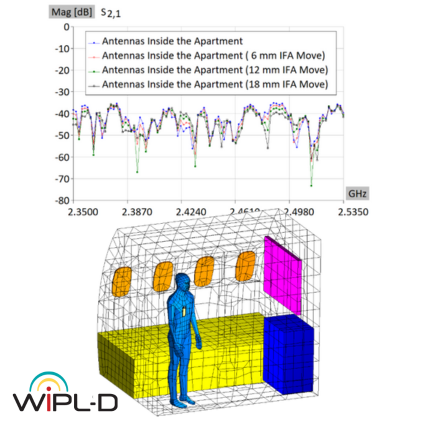
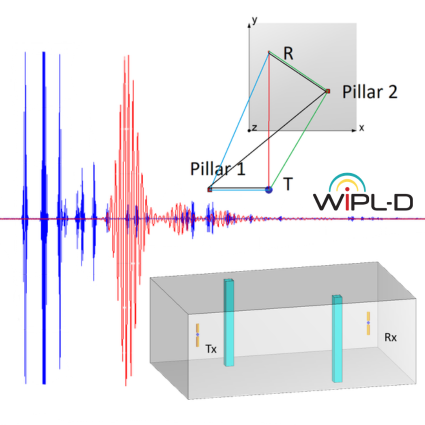
As the use of electronic devices such as mobile phones, IoT devices, and Bluetooth modules continues to increase, the need for accurate indoor propagation modeling becomes increasingly important. This study shows how the WIPL-D can be used to model indoor environments, considering the complexities of room structures and various obstacles, highlighting the impact of material properties on wave propagation. The goal is to calculate the EM field distribution in the frequency domain and transform it into the time domain for analyzing the signal by receiver antenna. The note compares the computational requirements of 3D and 2D simulations, with a focus on the number of unknowns and the simulation time required for modeling.