
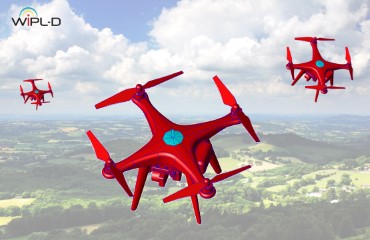
Real-life scenarios with three drones (UAVs) carrying a payload, flying in a line formation, and communicating at frequency band around 2.4 GHz were investigated focusing on pure electromagnetic topics related to the physical layer of communication link between the drones….

Different Simulation Scenarios Involving Unmanned Aerial Vehicles (UAVs)
Resources
17-Nov-2021
Events
01-Nov-2021
COMCAS 2021, November 01-03, Tel Aviv, Israel
We are proud to present our latest work on microwave imaging biomedical applications at COMCAS 2021 in Israel (virtually) as part of Wireless Apps program.
Software
28-Oct-2021
We are now ISO 9001:2015 recertified!
We are pleased to announce that last month we successfully passed the recertification audit of our ISO 9001:2015 standard, demonstrating our continued commitment to providing high‑quality services.
Events
26-Oct-2021
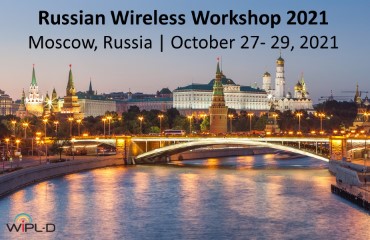
Russian Wireless Workshop 2021
Huawei Moscow Research Center will be hosting their annual “Russian Wireless Workshop” on October 27-29, 2021 at the Radisson Ukraina Hotel in downtown of Moscow. The agenda for this exciting event is filled with prominent experts in various areas, such…
Events
06-Sep-2021
IcETRAN 2021 (8-10 September 2021)
8th International conference on electrical, electronic and computing engineering (IcETRAN 2021) will take place in Ethno village Stanisic, Bijeljina, Republic of Srpska, from 8 to 10 September 2021. Our representatives will present 2 papers on Wednesday (08 September), 16:15 –…
Resources
21-Jun-2021
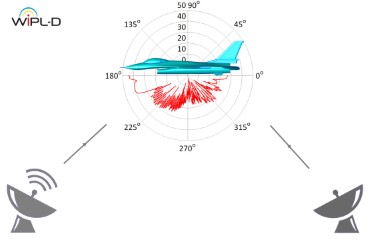
Monostatic, Bistatic, and Multistatic Radar Scenarios
The motivation behind this application note is to help various readers to understand basic concept of monostatic and bistatic radar scenarios. Examples explaining realistic monostatic, bistatic, and multistatic scattering scenarios are provided. The explanations were supported with WIPL-D Pro CAD, a full…